The Effective Executive: Summary & Key Lessons
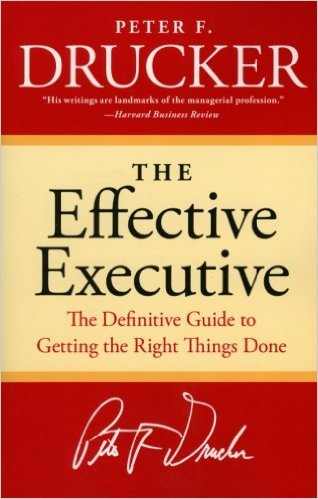
Peter Drucker published The Effective Executive in 1966, and it is the book I would give to anybody who feels busy yet unproductive. This effective executive summary distills the essence of what really counts. Drucker’s premise is almost maddeningly simple: effectiveness is not based on talent, it is a habit. It can be learned. Yet most people never develop it, because they treat being busy as the same thing as getting real work done.
Drucker watched many kinds of executives over his lifetime. He noted that the ones people considered successful were not necessarily smarter, and they did not work longer. They simply focused on fewer things and did so on purpose.
Drucker’s five habits
Drucker reduced personal effectiveness to five habits. Know how your time is actually spent, and on what. Most people are astonished by how much of it goes to unproductive activity once they track it. Focus outward on the contribution you can make, rather than on ticking off every assigned task. Work from your strengths and the strengths of others, instead of grinding away at weak areas. Do the most important thing first, and finish it before moving on. And make a few decisions deliberately and slowly, actively testing them against disagreement rather than rushing to agree.
Time management alone may be worth the cost of the book. Drucker advises recording your time for several weeks, eliminating tasks that don’t need doing, delegating what others could complete, and then defending the large, undisturbed blocks that remain.
What the book gets wrong
This is a book intended for people running organizations. Drucker’s examples are hospital administrators and corporate department heads, so if you are a solo freelancer, some of the ideas won’t map directly to your situation. There is no discussion of money, marketing, or building a business; it is purely about managing yourself and your decisions. Drucker also writes densely, with no stories or hand-holding to coast on. If you are hunting for tactics, apps, or a productivity system, look elsewhere. This is a thinking book, not a hacks book.
Who should read it
Anybody who earns their living by making judgments rather than logging hours — founders, managers, professionals who have hit the ceiling of “there just aren’t enough hours.” Building wealth eventually becomes a question of where your attention goes, and nobody frames that better than Drucker. Before you change anything next week, log your time for seven days. Until you see the truth of how your hours are spent, you can’t improve where they go, which is exactly where Drucker begins. If you lead a team, Tribal Leadership covers the culture side of the same problem, and if simply starting is your sticking point, The 5 Second Rule pairs well. To turn Drucker’s principles into a daily system, see how to be more productive.
The Effective Executive FAQ
What is The Effective Executive about?
It is Peter Drucker’s guide to managing yourself for results. The core idea is that effectiveness — doing the right things — is a learnable habit built on five practices: managing your time, focusing on contribution, building on strengths, setting priorities, and making decisions well.
What are the five practices in The Effective Executive?
Know how your time is spent, focus on contribution, make your strengths productive, do first things first, and make effective decisions. Drucker argues you can develop all five with practice.
Is The Effective Executive worth reading?
Yes, if you manage your own work or a team. It is short, about 180 pages, dense, and still one of the clearest books ever written on prioritizing. Skip it only if you want quick productivity tricks rather than principles.
How long is The Effective Executive?
Around 180 pages, a couple of evenings, but it rewards re-reading, and many readers go back to it every year.
As an Amazon Associate, Millionaires Books earns from qualifying purchases.