The Power of Full Engagement: Summary
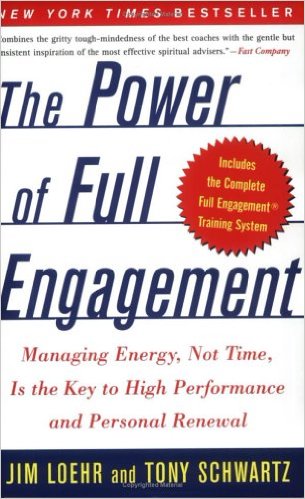
Many books about productivity tell you to get your time management better. The Power of Full Engagement states that you are attacking the wrong target. This power of full engagement summary has the reframing that allowed the book to stick — time is fixed, however your energy levels are not, and it is your energy levels that you really spend while working.
Jim Loehr and Tony Schwartz came from sports psychology and were coaching elite athletes. What they found was that top performers do not grind all the time. Instead, their patterns are based on oscillating between high-intensity periods and significant amounts of recovery. So they wondered why the rest of us treat our jobs like a straight-line marathon, then wonder why we burn out.
The four energy tanks
Loehr and Schwartz identified four types of energy that contribute to your overall capacity:
- Physical energy — the basics such as sleep, food, and movement, the boring stuff most people would rather not hear about.
- Emotional energy — how confident and connected you feel versus anxious and frustrated.
- Mental energy — how well you are able to focus and maintain attention on the things you want to attend to.
- Spiritual energy — having a purpose that gives your efforts some value.
If you drain any one tank, your performance will begin to decline regardless of the number of hours you spend working.
Their solution is rituals. Not willpower or motivation — rituals are simple, repetitive activities that replenish your various types of energy: a real lunch away from a screen, a serious workout, a meaningful shut-down process at night. Most elite athletes engage in these. Very few knowledge workers do — it is the same discipline the best books on discipline keep circling back to.
Where it falls short
The authors rely on a sports-science approach, but the actual science behind much of what they say appears thin. Much of the evidence is anecdotal, client-based experience, and spiritual energy is never clearly defined enough to measure. For those who have read other books about routines, such as Atomic Habits, much of this may feel very familiar — Loehr and Schwartz simply use athletic examples instead of typical business ones. The book also repeats itself, so much so that its central idea could have been a long article.
Who should read it
This book is aimed at ambitious professionals who continually find themselves running low on gas — especially entrepreneurs, since many treat exhaustion as a badge of honor. Building wealth is generally a decade-long game, and it is unlikely you can win it while exhausted. In essence, it is a practical argument for building recovery into your work, not viewing recovery as a reward after finishing. See more in the mindset hub, and if following through is the hard part, The 5 Second Rule is a useful companion. To build the rituals into a routine, see how to be more productive.
The Power of Full Engagement FAQ
What is The Power of Full Engagement about?
It argues that managing your energy, not your time, is the real key to high performance. Jim Loehr and Tony Schwartz show that sustainable output comes from cycling between full effort and real recovery across four types of energy.
What are the four sources of energy?
Physical, emotional, mental, and spiritual. The book says peak performance depends on renewing all four, and that draining any one of them drags the rest down.
What does “manage your energy, not your time” mean?
Time is fixed — everyone gets 24 hours — but the energy you bring to those hours varies. The point is that raising the quality of your energy matters more than squeezing extra hours out of the day.
Is The Power of Full Engagement still worth reading?
Yes, for the core reframe and the rituals framework, though the science is light and some of it overlaps with newer habit books. Read it for the mindset shift.
As an Amazon Associate, Millionaires Books earns from qualifying purchases.