Habit Stacking: Summary & Key Lessons
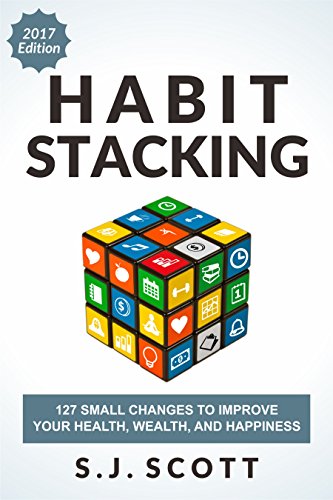
Is the habit stacking book worth it?
If you’re considering the habit stacking book — S.J. Scott’s Habit Stacking: 127 Small Changes to Improve Your Health, Wealth, and Happiness — here’s the honest take: it’s more like a catalog you browse than a book you read straight through. Scott’s idea is that willpower fails when big changes are involved, so you build routines using very small habits that each take five minutes or less and chain them onto things you do every day already. Brushing your teeth triggers ten squats. Brewing coffee triggers reviewing top priorities. One trigger, one small action, repeat until it becomes automatic.
Scott hands you 127 ready habits across health, money, relationships and work. Rather than inventing your routine from scratch, you choose from a menu.
Strengths
Scott excels by providing implementation rather than just theory. Habits are small enough that failure is hard: drink a glass of water, write one sentence in a journal, check tomorrow’s calendar. He is also practical about structure: group habits into morning or evening stacks, keep the whole stack under 30 minutes, and use a checklist until it becomes automatic.
Weaknesses
There isn’t much argument holding the book together. Why do habits form? Why do cues and rewards matter? What do you do when a habit breaks down? The book shrugs. The prose is workmanlike, some of the 127 entries are filler (a few amount to “smile more”), and the Kindle-first formatting shows. A toolbox, not a teacher.
Habit stacking vs Atomic Habits: which one?
Order matters here. Start with our Atomic Habits summary first — James Clear explains why stacking works and how to design habits that stick. Scott’s book is the parts bin: 127 pre-sized habits to plug into Clear’s system. If you buy only one, buy Atomic Habits. If you already own Atomic Habits and get stuck wondering “okay, but which habits?”, Scott’s list will get you moving fastest. Both books are on our best books on discipline list, and the logic behind compounding is explained in The Compound Effect.
Habit Stacking FAQ
What is habit stacking?
Attaching a new small habit to an existing routine so that cues from the old habit trigger the new one: “after I pour my coffee, I write down my top three priorities.” Existing habits serve as cues, and that is why stacked habits stick faster compared to habits scheduled by willpower.
Is Habit Stacking by S.J. Scott worth reading?
Worth using more than worth reading. Treat it as a reference: skim through the framework chapters and mine the list of 127 habits for the eight or ten that fit your life. Readers expecting narrative or deep research will be let down; readers looking for a pre-made menu usually get good value for money.
Your one action step
Tonight, choose one existing daily action — coffee, brushing your teeth, shutting the laptop — and add one new five-minute habit right after it. Wait until the first new habit survives two weeks before adding another one.
As an Amazon Associate, Millionaires Books earns from qualifying purchases.