The Compound Effect: Summary & Key Lessons
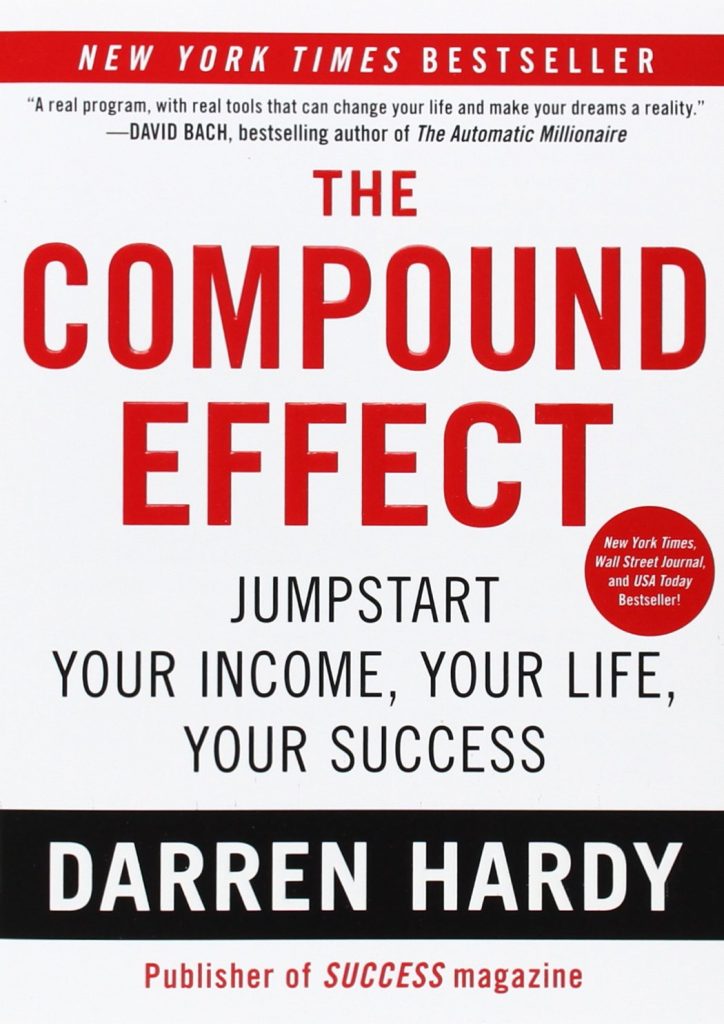
The Compound Effect summary in two sentences
This is the compound effect summary at its shortest: the choices you make each day — from what you eat to who you hang out with to what you read — build up over time into either the life you wanted or one you didn’t choose. According to Darren Hardy, long-time publisher of SUCCESS magazine, there is no such thing as “overnight” success and no “overnight” failure; both are simply interest payments on your daily behavior.
The book has one of the best illustrations of compounding ever written — the magic penny. Given the option to receive $3 million today, or start with one penny that doubles in value each day for 31 days, most people would choose the cash — and miss out, because the doubling penny ends the month at about $10.7 million. Nothing visible happens for the first 20 days. That’s the point. Compounding is invisible until it becomes impossible to stop, which is why most people give up before it pays off.
The system behind the slogan
Hardy is more practical than the premise sounds. The engine behind the book is tracking: select a category — money, food, time — and document every single decision you make in it for three weeks. You’re not judging the decisions. You’re just writing them down. Awareness alone kills a surprising share of the bad choices, because most of them were never conscious to begin with.
After that, Hardy adds everything else: be accountable for 100% of your outcomes (there’s no room for victim math); link every habit to your reason for building it — your “why”; protect your input sources, meaning the news you consume and, borrowing his mentor Jim Rohn’s phrase, the five people you spend the majority of your time with; and then let momentum carry it once the routine has held for a while. Hardy calls this Big Mo: for weeks your new routine feels laborious and heavy — then one day the routine carries you.
The Compound Effect review: the good and the bad
What works: it’s one of the few self-development books that provides a way of measuring progress instead of simply providing motivation. The tracking exercise can be applied to virtually any area of your life, and the penny math reframes patience as a strategy rather than a virtue. What drags: Hardy writes with an excessive number of exclamation points and very little sourcing behind his examples, and several later chapters re-argue the thesis with fresh anecdotes. The core is chapters one through three plus the tracking exercise.
Who should read it (and who shouldn’t)
If results appear random to you — if you can’t see the correlation between what you do daily and where you are yearly — read this book. If you already track your habits and want mechanics, skip it: our Atomic Habits summary covers habit construction with far more precision, and Habit Stacking hands you ready-made routines. For the money-specific angle, our money mindset books roundup puts this one in context.
The Compound Effect FAQ
What is the main point of The Compound Effect?
That success is the product of small, smart choices repeated consistently over time — and that the same math works against you when the small choices are bad. Hardy’s contribution is insisting you track those choices on paper so the invisible trend becomes visible.
Is The Compound Effect worth reading?
Yes for beginners: it’s short, direct, and the tracking exercise alone justifies it. Experienced habit-trackers will find it repeats things they already do, and should go deeper with a mechanics-focused habits book instead.
Your one action step
Pick the area of your life with the most friction — usually money or food. For the next 21 days, write down every action you take in it. No changes, no judgment, just the log. The log will tell you exactly which choice to fix first.
As an Amazon Associate, Millionaires Books earns from qualifying purchases.