Conscious Capitalism: Summary & Key Lessons
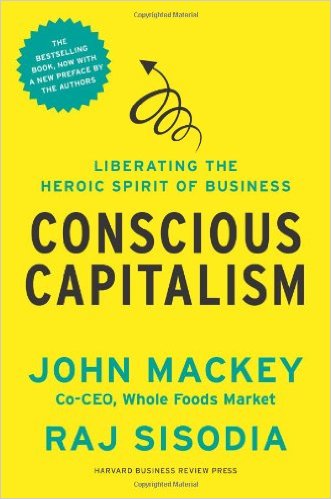
Conscious Capitalism, co-written by Whole Foods co-founder John Mackey, argues that business can and should be a force for good — and that companies built on a higher purpose actually outperform those chasing profit alone.
Mackey and Sisodia lay out four tenets: a higher purpose, stakeholder integration (serving customers, employees, suppliers, and communities, not just shareholders), conscious leadership, and a conscious culture. The book makes both a moral and a practical case that doing well and doing good can reinforce each other.
Key takeaways:
- Businesses built on a genuine higher purpose can outperform purely profit-driven ones.
- Serving all stakeholders, not just shareholders, builds durable value.
- Capitalism works best when it’s conscious of its broader impact.
Who it’s for: founders and leaders who want to build a profitable business that also stands for something.
The verdict: idealistic but grounded in real examples, including the author’s own company. A worthwhile counterpoint to the idea that business is only about the bottom line — and an argument that purpose can be a competitive edge.
As an Amazon Associate, Millionaires Books earns from qualifying purchases.